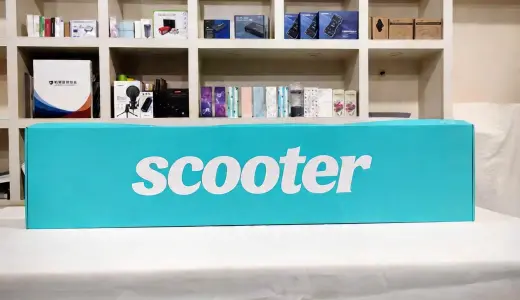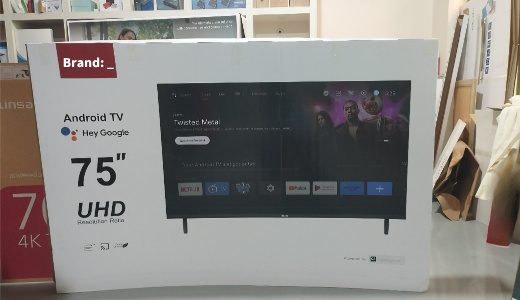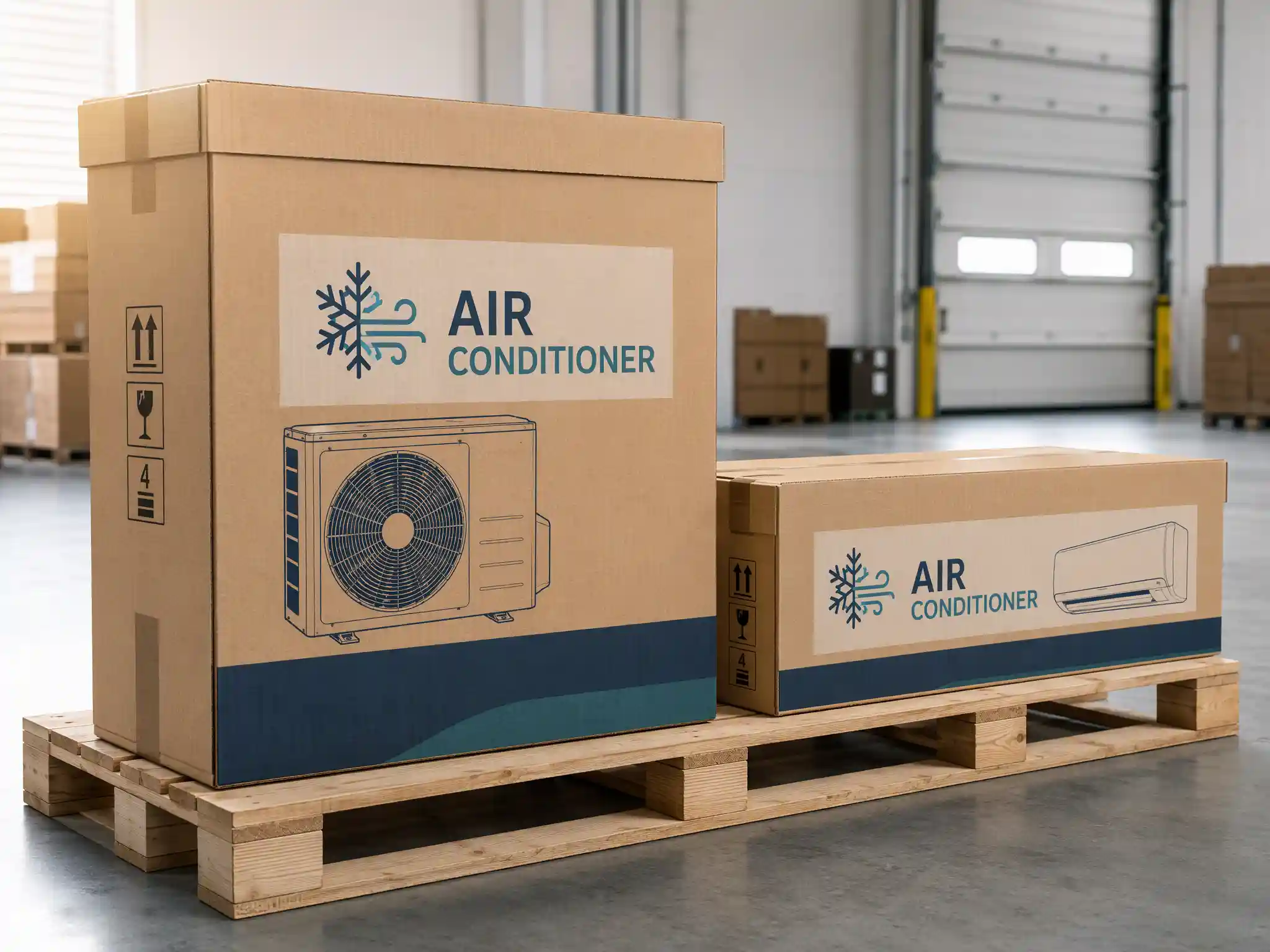
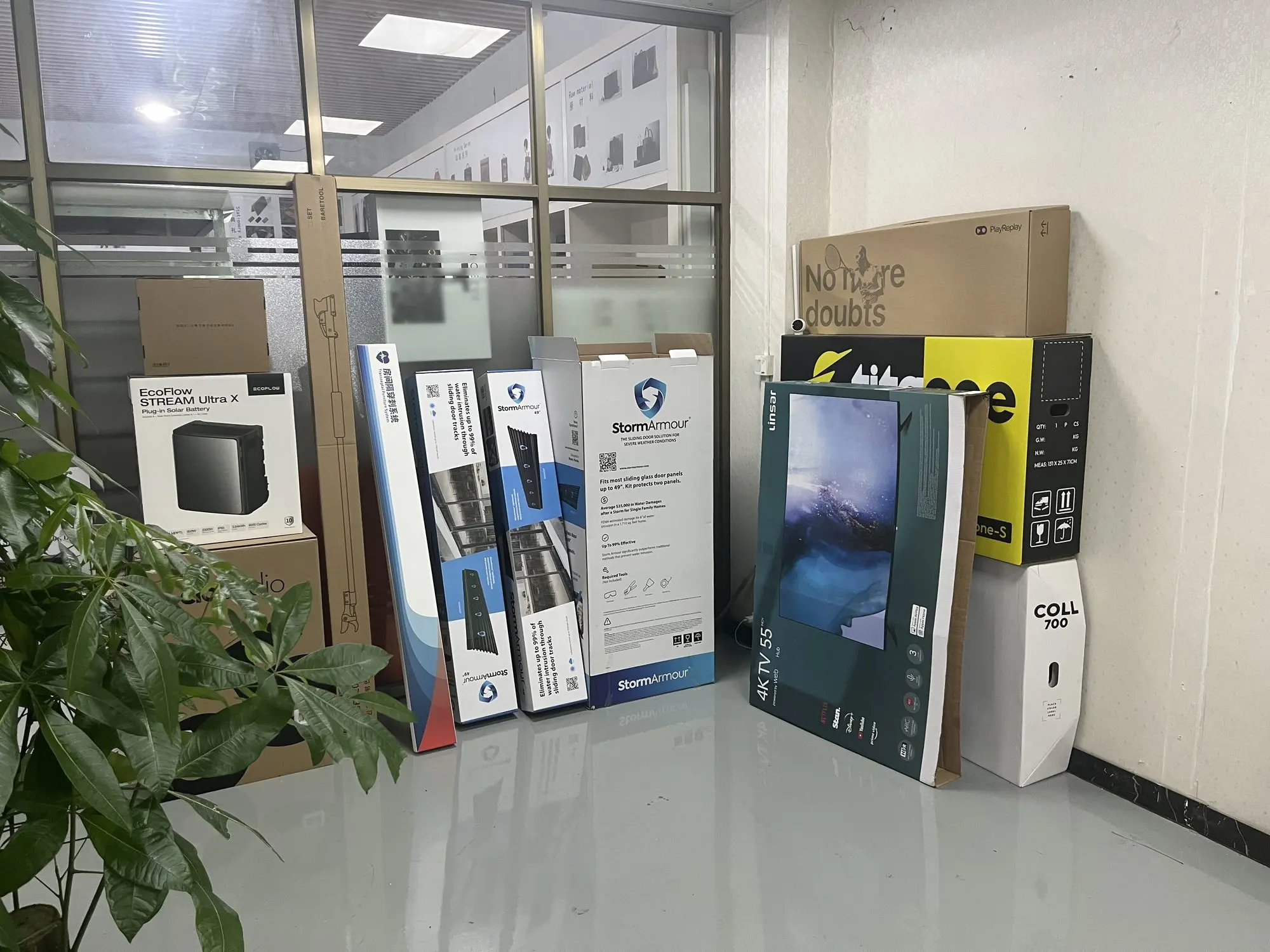


Litho-laminated corrugated boxes combine offset-printed paper with a corrugated board structure. The result is retail-grade print quality on a box strong enough to ship a refrigerator, a 75-inch TV, or a piece of industrial equipment.
This page explains how litho lamination works, when it beats digital direct-to-board printing, what sizes and board combinations are available, and what to send us to get a quote.
What Is Litho Lamination?
Litho lamination is a two-step process. First, the artwork is printed by offset lithography onto a sheet of paper — usually coated art paper, kraft, or a specialty stock. That printed sheet is then laminated (glued) onto a sheet of corrugated board. The combined sheet is die-cut, folded, and glued into a finished box.
The key difference from direct printing is the order of operations. With direct printing, ink goes onto the board itself. With litho lamination, ink goes onto paper first, and the paper is bonded to the board afterward.
This matters for three reasons:
Print quality. Offset lithography holds fine detail, tight registration, and smooth gradients better than direct-to-board printing. Small type, photographic images, and multi-color brand marks reproduce more accurately.
Surface options. Because the printed surface is paper, you can add aqueous coating, matte or gloss varnish, spot UV, or film lamination before the sheet ever touches the board. Direct printing on corrugated has a much narrower finishing range because the board's flute profile shows through.
Board choice independence. The printed sheet and the structural board are selected separately. You can pair high-gloss artwork with a heavy double-wall board for a product that needs both shelf impact and shipping strength.
The trade-off is setup. Offset printing requires plates, which means a make-ready cost that digital printing does not have. That cost is fixed per print run, so it spreads across the order quantity. This is why litho lamination makes economic sense at volume and becomes expensive at very low quantities.
Litho-Laminate vs Digital Direct-to-Board
Both methods produce full-color printed corrugated boxes. They are not competitors so much as two tools that cover different order profiles.
| Litho-Laminate | Digital Direct-to-Board | |
|---|---|---|
| Print method | Offset onto paper, then laminated to board | Ink printed directly onto corrugated board |
| Plates | Required — one set per color | None |
| Best for | High-detail graphics, brand-critical packaging, larger runs | Short runs, multiple SKUs, frequent artwork changes, prototypes |
| Artwork changes | New plates needed | File swap, no setup cost |
| Color consistency | Very high across long runs | Good, with minor variation between runs |
| Surface finishes | Wide — varnish, spot UV, film, specialty stocks | Limited by board surface |
| Unit cost curve | High at low volume, drops sharply with quantity | Flat — same cost per unit at 50 or 5,000 |
| Typical fit | Retail-facing packaging, premium unboxing, brand launches | Test runs, regional variants, limited editions, sample programs |
How the two methods cover the full range
A brand launching a new product line often uses both. Digital direct-to-board printing produces the first samples and the initial market-test run, because artwork is still changing and nobody wants to pay for plates that will be obsolete in a month. Once the design locks and volume climbs, the same artwork moves to litho lamination, where the per-unit cost falls and print quality improves.
We run both processes in-house, which means the transition from digital to litho does not require changing suppliers, re-qualifying a dieline, or re-testing a packaging configuration. The same structural drawing carries through.
If you are unsure which method fits your order, send us the quantity, the number of SKUs, and how often the artwork changes. That is usually enough to answer the question.
Sizes, Board Options, and Finishes
Print panel size
Litho-laminated wraps are produced on panels up to 2 × 1.4 m. Larger boxes are built from multiple panels rather than a single oversized sheet. This is normal for large-format packaging — a refrigerator carton or a piece of industrial equipment housing is typically assembled from several printed and structural components rather than one continuous wrap.
For very large products, we design the box as a multi-piece structure: a printed front panel, structural corner pieces, and a base, assembled according to the product's weight distribution and handling requirements.
Corrugated board
The structural board is chosen independently of the print. Options include single-wall, double-wall, and triple-wall constructions in various flute profiles. The choice depends on:
- Product weight — heavier products need higher puncture resistance and better compression strength
- Stacking load — warehouse and container stacking determines the compression requirement
- Transit mode — air freight, ocean container, and less-than-truckload shipments stress boxes differently
- Handling — manual handling versus palletized forklift movement
We select the board after reviewing the product weight, the packaging configuration, and the shipping route — not before.
Printed surface and finishing
The laminated sheet can carry:
- Aqueous coating (matte or gloss)
- UV varnish, including spot UV for selective gloss
- Film lamination for scuff resistance
- Specialty paper stocks for texture or uncoated feel
Finishes are chosen together with the artwork, because a finish that looks right on a flat proof can behave differently once laminated to board and folded.
Where Litho-Laminated Packaging Is Used
Litho lamination earns its cost when the box is seen by the end customer and when the product justifies a premium unboxing experience. Typical applications:
Television and display packaging. Large flat panels need a box that protects a fragile screen and still presents a branded surface in retail or during unboxing. Printed front panels with product imagery are common.
Home appliances. Refrigerators, washing machines, and ovens ship in large cartons that are often photographed for retail listings and delivery content. High-graphic printing turns a shipping carton into a brand asset.
Commercial and industrial equipment. Equipment housings, commercial display units, and industrial machinery benefit from printed panels that carry specifications, handling instructions, and brand identity.
Medical and laboratory equipment. Where the packaging is part of the product presentation — and where traceability and clean presentation matter — printed corrugated with controlled graphics is often specified.
Furniture and oversized consumer goods. Flat-pack furniture, mattresses, and large home goods use printed cartons to communicate assembly information and brand quality at the point of delivery.
If your product does not appear on this list, the question is usually whether the box is customer-facing. If it is, litho lamination is worth evaluating. If the box only ever sits in a warehouse, standard unprinted corrugated is usually the better economic choice.
Offset Printed Corrugated Boxes: What the Name Covers
Buyers searching for offset printed corrugated boxes are usually describing the same product as litho-laminated corrugated boxes, from a different angle. Offset printing is the printing method; lamination is what happens to the printed sheet afterward. Both terms point to a box where the graphics were produced by offset lithography and then bonded to corrugated board.
The terminology varies by region and by supplier. You will also see litho mounted, litho laminated, and pre-printed liner used to describe the same construction. What matters when comparing quotes is not the name but three specifics:
- What is printed — the liner sheet, or the board surface directly
- How it is bonded — laminated to single-wall, double-wall, or triple-wall board
- What the finished structure is — a shipping container, a display unit, or a retail-ready pack
Two suppliers can quote "offset printed corrugated boxes" and deliver very different products. Ask for the board grade, the liner weight, and the finishing specification before comparing price.
We produce offset printed corrugated packaging under all of these names, with the same underlying process and the same quality checks.
High-Graphic Corrugated Packaging: Design Considerations
High-graphic corrugated packaging puts a retail-quality printed surface on a structural shipping box. The design work is different from designing a folding carton, and a few constraints are worth knowing before artwork is finalized.
Flute direction affects what you can print. Corrugated board has a grain direction, and the board flexes along it. Artwork that spans a fold line can crack or distort if the coating is too brittle or the fold is too tight. Where a printed panel wraps around a corner, we adjust the dieline or the coating rather than asking the artwork to survive a fold it cannot.
Large panels change the viewing distance. A design that reads well on a 30 cm cosmetic box may look sparse on a 1.5 m appliance panel. Type sizes, logo scale, and image resolution all need to be set for the actual panel size, not scaled up from a smaller pack.
Color consistency across panels matters more than on a single box. When a box is built from multiple printed panels, adjacent panels must match. This is a registration and ink-control question during the press run, and it is one reason large-format litho work is checked on press rather than only at final inspection.
Surface finish changes the fold. Gloss film lamination resists scuffing but can stiffen the sheet at fold lines. Matte aqueous coating folds more predictably but scuffs more easily in transit. The right choice depends on whether the box is handled roughly in a warehouse or displayed carefully in a showroom.
From Artwork to Production
1. Artwork review
We start with your print-ready files or, if you have only a concept, with a design discussion. We check resolution, color mode, bleed, and how the artwork will sit on the dieline.
2. Color specification
Colors are specified as CMYK, Pantone, or a combination. Where brand colors must match exactly, Pantone references are used and matched on the actual paper stock, not on screen.
3. Dieline and structure
The box structure is drawn as a dieline — the flat cutting and folding pattern. For large products, this step also determines how many pieces the box requires and how they assemble.
4. Proofing
A digital or press proof shows color and layout before plates are made. This is where artwork problems are cheapest to fix.
5. Sample
A physical sample confirms structure, fit, print, and finish. For large packaging, we recommend a sample even when the artwork is straightforward, because board behavior and fold quality are hard to judge on screen.
6. Production
Offset printing, lamination, die-cutting, and gluing run in sequence. Print is checked against the approved proof during the run, not only at the end.
What We Need to Quote
To price a litho-laminated project accurately, we need:
- Box inner dimensions — length × width × height, with units
- Quantity — per size, and how many sizes
- Product weight — or the packed weight, if the product is already packed
- Printing requirement — full-color litho lamination, and whether any surface is unprinted (see our custom printed box options)
- Destination country or port
- Artwork status — print-ready files, or design needed
- Target date
Send these and we will come back with a structural drawing, a material recommendation, and a quotation.
Frequently Asked Questions
What is the difference between litho-laminated and direct-printed corrugated?
Litho lamination prints on paper first and bonds that paper to corrugated board. Direct printing puts ink straight onto the board. Litho lamination gives sharper detail, more finishing options, and better color consistency on long runs; direct printing avoids plate costs and suits short or changing runs.
What is the largest box you can produce with litho lamination?
Printed litho panels run up to 2 × 1.4 m. Larger boxes are built as multi-piece structures using several panels rather than a single oversized sheet. The structural design determines how the pieces assemble.
Is litho lamination more expensive than digital printing?
At low quantities, yes — because plates carry a fixed setup cost. As quantity increases, the per-unit cost of litho lamination falls below digital. The crossover point depends on the number of colors, the box size, and the finishing.
Can I get a printed sample before ordering?
Yes. We produce physical samples that confirm structure, fit, print, and finish. Sample lead time and cost depend on the artwork status and the box structure.
Can litho-laminated boxes be used for shipping, not just display?
Yes. The corrugated board provides the structural strength; the printed paper is laminated to it. Board grade is selected based on product weight, stacking load, and transit mode. A litho-laminated box is a shipping box with a printed surface, not a display box that cannot travel.
Do you print inside the box as well?
Interior printing is possible on selected structures. Whether it makes sense depends on the box type and the assembly process — mention it when you send your specification and we will confirm.
Talk to Us About Your Box
Send your dimensions, quantity, product weight, and artwork status. We will reply with a structural drawing, a board recommendation, and a price.
Request a Litho-Laminated Box Quote — include your box size and quantity, and tell us whether the artwork is ready or still in development.
Get a Litho-Laminated Box Quote
Chat on WhatsApp — +86 198 1204 9242 or send your box size and quantity in the form for a same-day quote